
"high requirements"
10000 article(s) found

The Origin and cultivation of Yunnan small Coffee and the Brand ranking of Yunnan small Coffee
For professional baristas, please pay attention to the coffee workshop (Wechat official account cafe_style) Coffee originated in Ethiopia in north-central Africa, located in 6-9 N and 34-40 N, 1300-1900 m above sea level, 1600-2000 mm rainfall and an average annual temperature of 20 ℃. Coffee has specific requirements for environmental conditions, such as calm wind, cool, shady or semi-shaded environment.

What equipment do you need to make coffee at home_Price list of materials and equipment required for Italian coffee
Professional coffee knowledge exchange More coffee bean information Please pay attention to coffee workshop (Weixin Official Accounts cafe_style) When you want to buy coffee machine, remember that a penny is worth the goods, the price reflects the quality. In addition to the appearance of the casing you see, there are also the principle of grinding beans inside the machine, the manufacturing materials of important parts, and the overall quality of use. What you really need is not just a coffee shop.

The formation and production of milk foam requires what brand of milk Italian style to mix coffee beans with.
In general, the fat content in milk is about 4-5% (composed of different types of fat) and exists in milk in the form of fat balls with sizes ranging from 0.1 to 10 microns. With triglyceride (triglyceride) as the core, it is surrounded by a film composed of proteins, phospholipids and glycerides. This natural milk fat globule membrane can effectively prevent

The flavor is similar to that of drip filter coffee, but the skill is higher: Chemex hand brewing pot
Professional barista exchanges please follow the coffee workshop (Wechat official account cafe_style) required materials: Chemex hand flushing pot Chemex special filter paper coffee bean grinder hot water bottle electronic scale timer cooking time: 34 minutes background knowledge: in 1941, the German inventor Peter Schlumbohm designed the Chemex hand flushing pot, to this day, its exquisite design is still

What is the variety and quality of coffee grown in Pu'er District, a high-quality bean in Yunnan coffee producing area?
Pu'er Coffee is the main and largest coffee producing area in China. At present, Yunnan coffee producing areas are mainly distributed in Simao, Banna, Wenshan, Baoshan, Dehong and other areas in the south and southwest of Yunnan. The main producing area of Yunnan coffee imported by Huangsheng Coffee Company is Pu'er, a small town in Simao and the hometown of Pu'er tea.
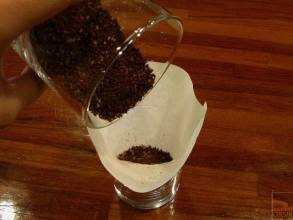
The thickness of coffee bean grinding Italian coffee pot requires the thickness of grinding powder and the use of Italian pot
Because different cooking methods require different grinding sizes, it is important to establish a good interactive relationship with the stores you buy coffee beans, so that the sales staff will provide you with the freshest and best quality coffee beans, or constantly adjust the grinding granularity for you to grind the ideal coffee powder for you. Coarse graininess: about as big as planed sawdust

Flavor description of Arabica espresso beans introduction to the region of manor production
Arabica espresso bean flavor description taste manor area Arabica coffee trees grow mostly between 900m and 2000 m above sea level; they are hardy, and the suitable growth temperature is 1524 ℃; they need greater humidity, and the annual rainfall is not less than 1500 ml. At the same time, higher requirements for cultivation techniques and conditions are also required. Arabica coffee beans are now mainly grown in South America.

Harvest and processing methods of coffee beans General knowledge of fine coffee
From the coffee-producing countries, we can find that since almost all coffee is produced in countries with more cheap labor, it can be guessed that the process of harvesting coffee beans requires a lot of manpower. Yes, the harvesting of coffee is very hard and requires a lot of manpower, especially in many high-quality coffee, which can only pick fully ripe red cherries from coffee trees.

What's the difference between Arabica coffee beans and Roberta coffee beans? Arabica Coffee Tree Robbas
Different planting conditions [Elaraby Kadou] Arabica coffee has more stringent planting conditions, weak disease resistance, higher altitude requirements, slower growth, higher quality, and more refined processing of raw beans. Growing at colder altitudes in the tropics, it is an important kind of commercial coffee with a fruiting period of less than three years and a high-quality aroma and sour taste. Arabica coffee bean owner

Basic knowledge of coffee harvesting and processing methods of coffee beans
From the coffee-producing countries, we can find that since almost all coffee is produced in countries with more cheap labor, it can be guessed that the process of harvesting coffee beans requires a lot of manpower. Yes, the harvesting of coffee is very hard and requires a lot of manpower, especially in many high-quality coffee, which can only pick fully ripe red cherries from coffee trees.

Where is the origin of blue mountain coffee beans in Jamaica? is there a requirement for the roasting degree of hand-made coffee beans?
Professional coffee knowledge exchange more coffee bean information please follow the coffee workshop (Wechat official account cafe_style) front street-Jamaica Blue Mountain Coffee, handmade Coffee roasting degree introduction Blue Mountain Mountains are located in the east of Jamaica, the ridge that runs through Jamaica extends to the eastern part of the island, the highest peak of the Blue Mountain Mountains is 2256 meters, it is the highest peak in the Caribbean region. Because of being

Do you need filter paper for coffee dripping pot?-usage of Vietnamese dripping coffee pot
Do coffee drip pots need filter paper? Vietnam drip coffee pot usage 1. The degree of grinding of coffee is determined by the coffee equipment you choose. Because different coffee making methods require different sizes of grinding powder. 2. The best drinking temperature of coffee is 85 ℃. 3. Different production methods require different cooking time. 4. Coffee can no longer be heated and should be brewed.

The harvesting and processing methods of coffee beans basic knowledge of coffee
From the coffee-producing countries, we can find that since almost all coffee is produced in countries with more cheap labor, it can be guessed that the process of harvesting coffee beans requires a lot of manpower. Yes, the harvesting of coffee is very hard and requires a lot of manpower, especially in many high-quality coffee, which can only pick fully ripe red cherries from coffee trees.

The harvesting and processing of coffee beans basic knowledge of coffee beans
From the coffee-producing countries, we can find that since almost all coffee is produced in countries with more cheap labor, it can be guessed that the process of harvesting coffee beans requires a lot of manpower. Yes, the harvesting of coffee is very hard and requires a lot of manpower, especially in many high-quality coffee, which can only pick fully ripe red cherries from coffee trees.

An introduction to drip filter hand-brewed coffee with a simple and elegant process
Professional barista communication please pay attention to the coffee workshop (Wechat official account cafe_style) required materials: coffee bean filter cup filter paper hand pot coffee pot coffee bean grinder electronic scale timer brewing time: 2.53 minutes background knowledge: hand coffee skills are not high, the process is simple, elegant, but can extract the most complete flavor of coffee, very suitable for beginners
What steps are required for honey processing in Costa Rica? What steps need to be compared in coffee processing
Professional coffee knowledge exchange more coffee bean information Please pay attention to the coffee workshop (Wechat official account cafe_style) honey treatment: remove the peel and pulp, retain some or all of the mucous membrane (honey) honey treatment is not simple, the treatment takes a long time and must be handled with care. Then x 3, there are more refined and personalized procedures for drying or drying time and methods in the later stage.

Baristas are required to take coffee terms known as coffee common sense
Flavor [flavor] is the overall impression of aroma, acidity, and mellowness, which can be used to describe the overall feeling of contrast coffee. Acidity [acidity] is the acidity and strong quality of all coffee grown on the plateau. The acidity referred to here is different from bitterness or sour (sour) and has nothing to do with pH, but promotes coffee to exert its functions of invigorating the mind and clearing the taste.

Are there any prospects for boys to be baristas? do you know why baristas are paid so low?
Professional coffee knowledge exchange more coffee bean information Please follow the coffee workshop (Wechat official account cafe_style) baristas this profession sounds very high-end, feel that the baristas who make coffee in the bar are very cool, so many people enter this industry ignorantly, and later found that the job of baristas is really cool, but there is one that many people love.

What are the requirements for coffee beans to be paired and roasted, such as
On the other hand, such roasting is also related to the birthplace of Espresso. Espresso is a coffee extraction method originating in Italy. At the end of the 19th century and the beginning of the 20th century, when Espresso was born, Italy was not a rich country in Europe. Limited by its own economic strength, Italy's popular coffee quality was not excellent, and most of them were inferior. Luo

Taste characteristics of Costa Rican coffee beans in Huofenghuang Manor
The variety and taste of coffee beans in Fire Phoenix Manor in Costa Rica there are many excellent producing areas in Costa Rica, while the high-quality producing areas in Costa Rica have a common understanding of quality, that is, ripe coffee fruits are required to ensure the production of high-quality coffee. Generally speaking, a large amount of water is used in the post-processing of picked coffee fruit, but Costa Rica first